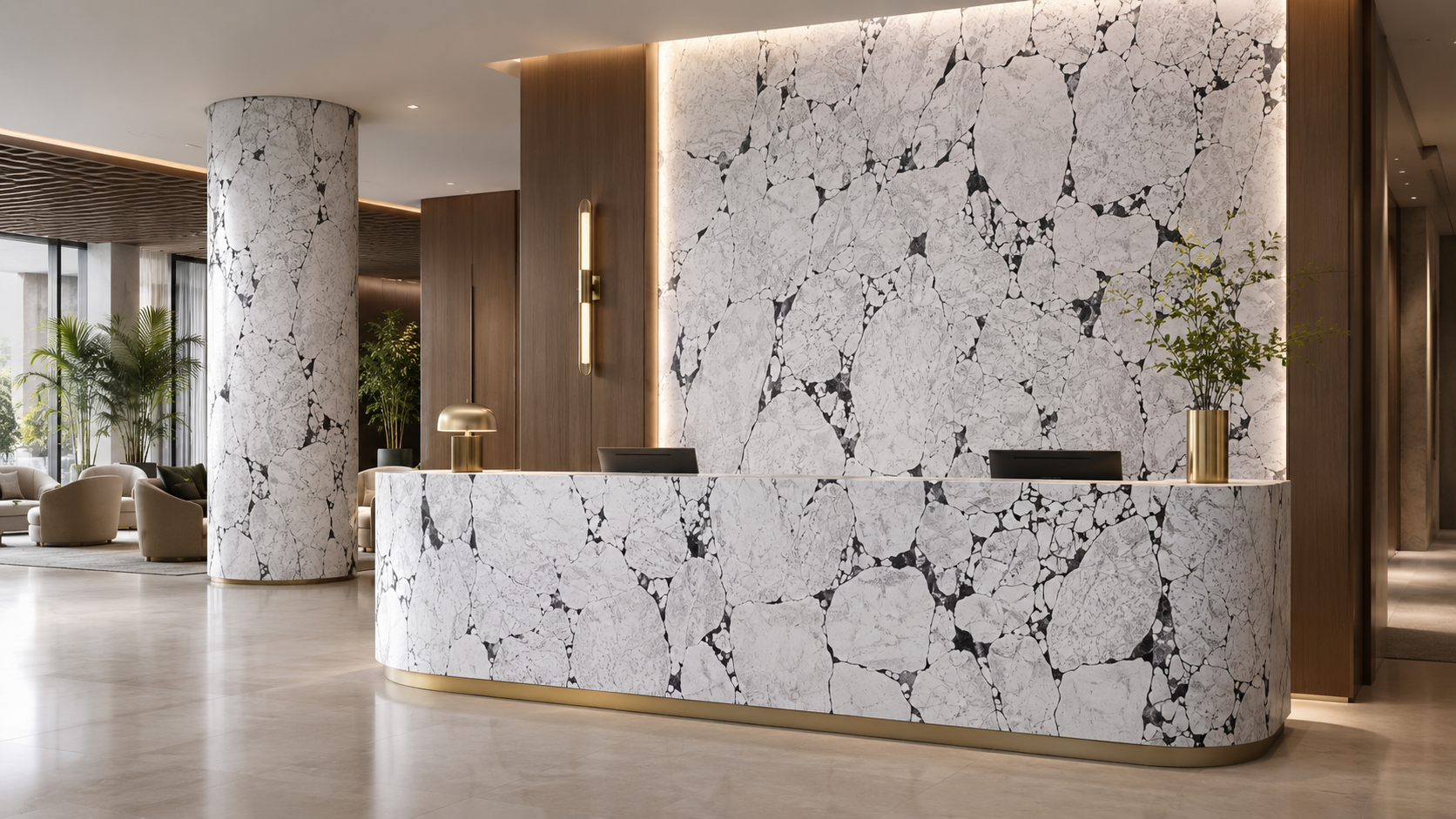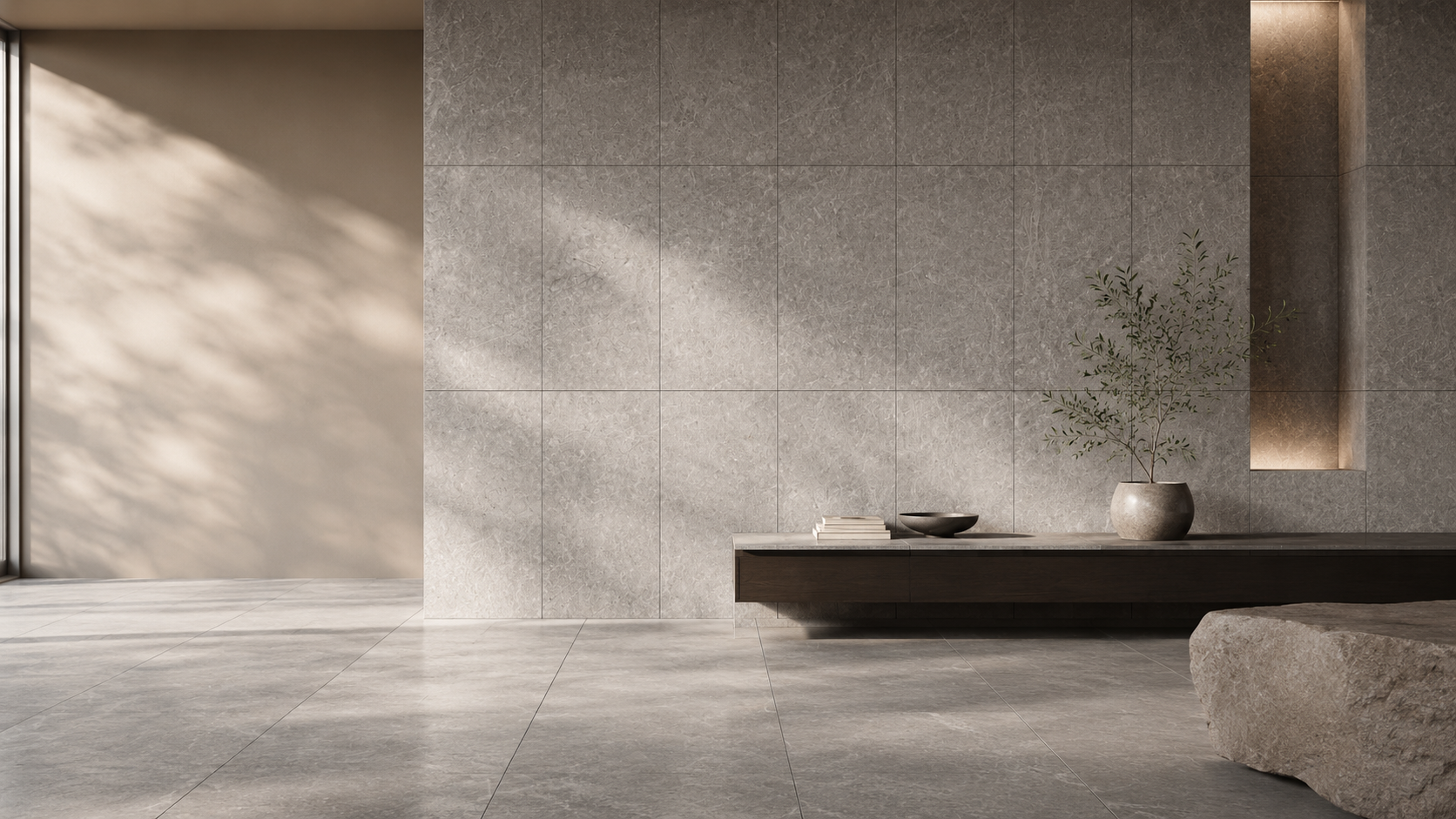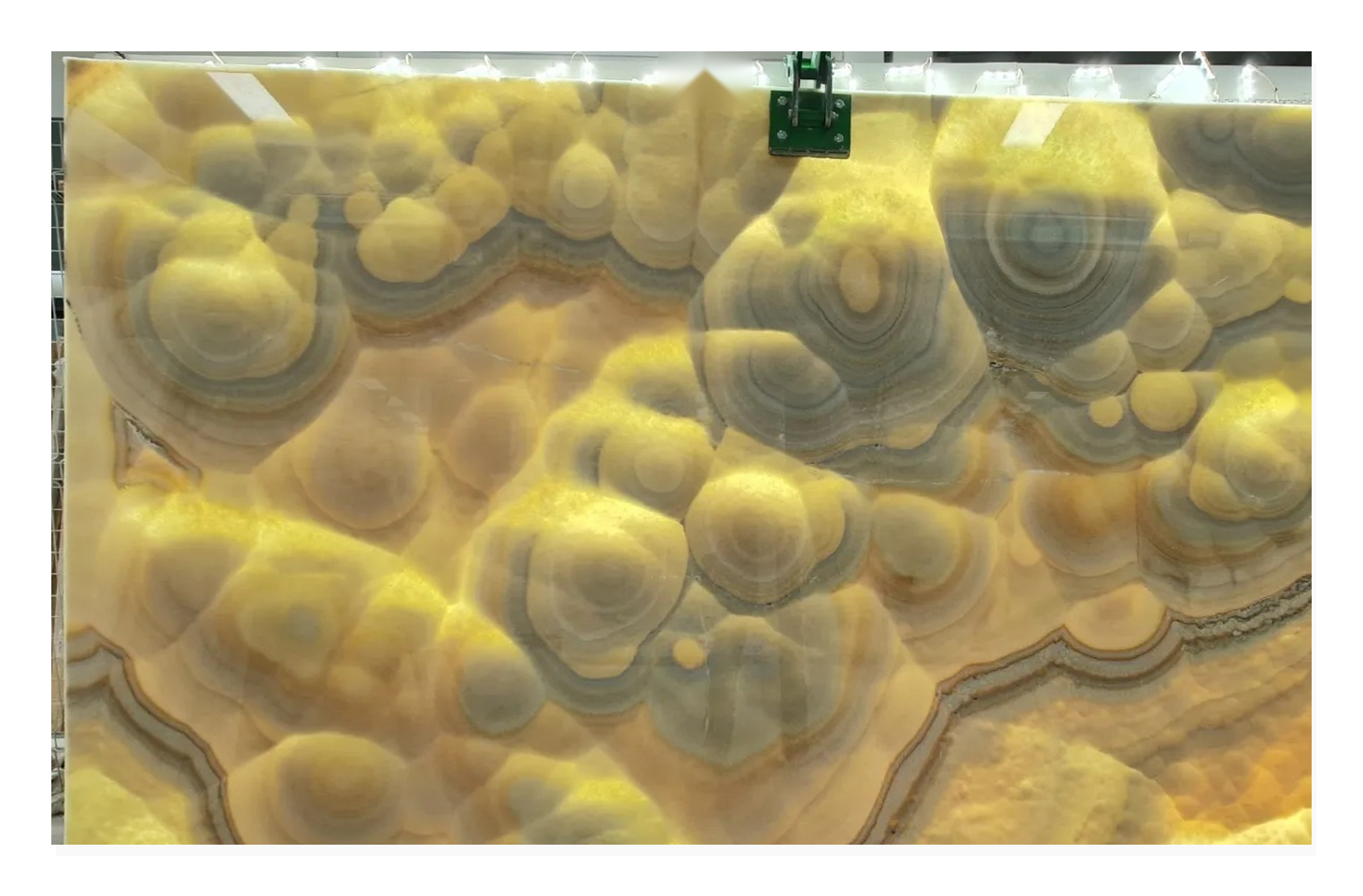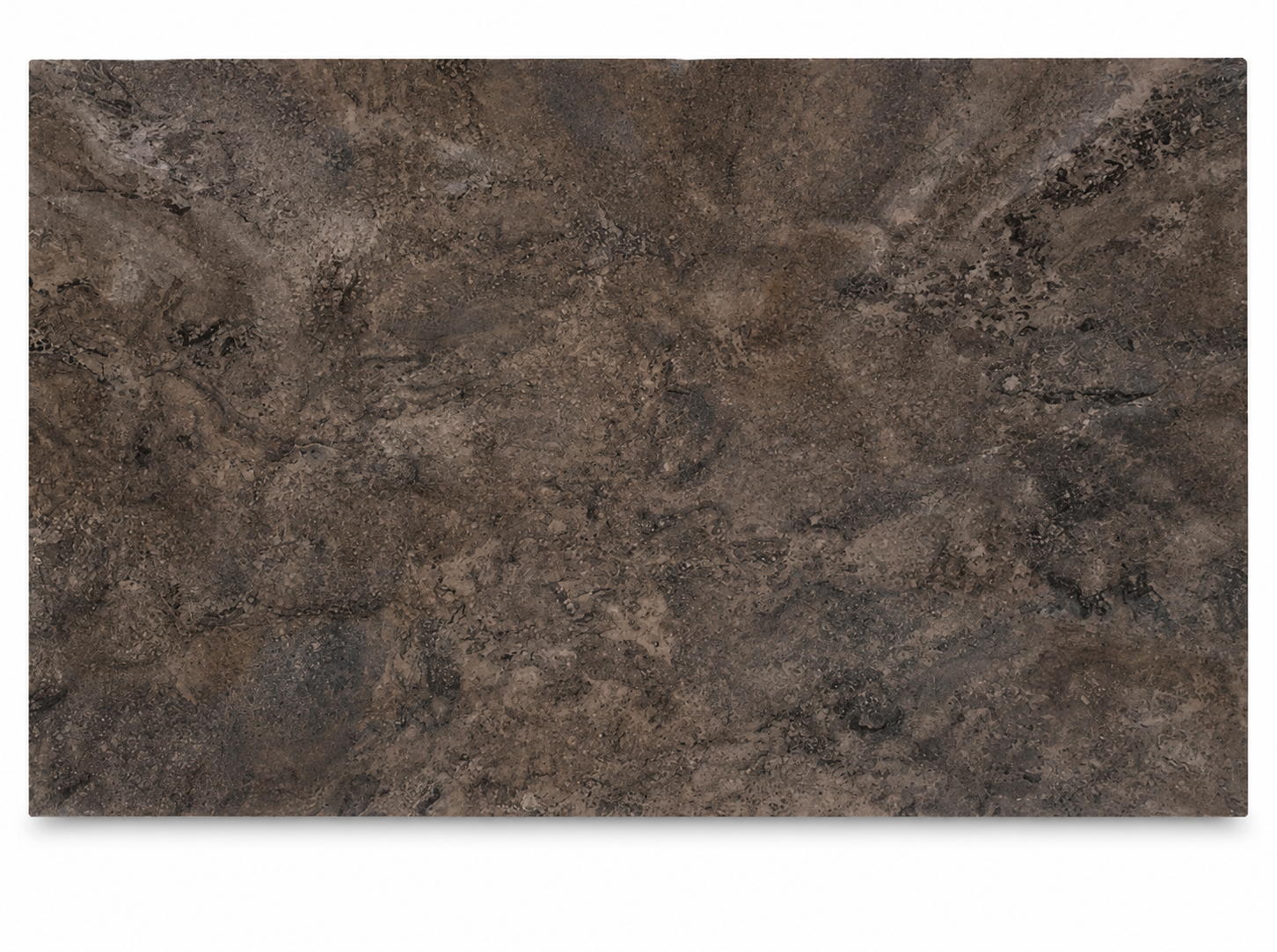
A photograph can help you discover a stone. It should rarely be the only reason you specify one.
Natural stone is not a printed product.
Every block is different. Every slab is different. Even consecutive slabs from the same block may reveal subtle changes in colour, vein concentration and movement.
For architects and interior designers, this means stone selection is not simply choosing a product name. It is curating material.
1. Start with the Architecture, Not the Stone Name
Before asking for a specific marble, define what the surface needs to do.
Should it disappear into the architecture? Should it become the focal point? Should it visually enlarge the room? Should it connect interior and exterior spaces? Should it feel calm or dramatic?
A soft grey stone with restrained movement may work beautifully across a large floor. The same stone may not provide enough impact for a dramatic hotel reception wall.
Conversely, an extremely expressive marble can be breathtaking on an island but overwhelming when repeated across every surface.
The right stone depends on scale.
2. Read the Slab as a Composition
Designers often look first at colour. Experienced stone selection goes further.
Look at the direction of the main veins, large mineral concentrations, areas of quiet background, changes in movement, natural fissures and how the slab might be cut.
Think of the slab as a painting from which smaller architectural pieces will be extracted.
A kitchen island might use the most expressive section. A backsplash may need continuity. A vanity might benefit from a quieter area.
This is why designers frequently prefer selecting the actual slabs rather than relying only on a small sample. Natural variation directly affects the final result.
3. Understand Vein Cut and Cross Cut
The direction in which certain stones are cut can completely change their appearance.
Travertine demonstrates this particularly clearly.
A vein cut exposes the geological layers as linear bands. A cross cut intersects those layers differently, producing softer and less directional movement.
Neither is inherently better. They communicate differently.
Vein cut can emphasize length and architectural rhythm. Cross cut can create a quieter, more organic field.
The important thing is to know which visual language belongs to the project.
4. Know the Difference Between Bookmatching and Vein Matching
These terms are often used interchangeably, but they describe different ideas.
Bookmatching typically uses consecutive slabs arranged so that adjoining faces mirror one another, creating a symmetrical composition similar to opening a book.
Vein matching is the broader process of aligning directional movement between pieces so the pattern continues through the installation.
Bookmatching can be spectacular with expressive marble or onyx.
But it should have a reason.
A small bathroom does not automatically become better because every surface is mirrored. The strongest bookmatches often appear where the architecture provides enough uninterrupted area for the natural pattern to be appreciated.
5. Select Several Slabs as One Material
Large projects should not be designed slab by slab.
Imagine a feature wall requiring eight slabs. If each one is individually beautiful but none relate to the next, the final wall may feel fragmented.
Instead, lay the slabs out digitally or physically as a sequence.
Ask: Where does the eye begin? Where do the veins travel? Which slabs should sit next to each other? Can a strong vein continue across a corner? Should neighbouring pieces mirror or flow?
This process is especially important for statement marbles, where the slab can become the dominant visual element in the room.
Current 2026 design coverage shows exactly this renewed appetite for stones with strong movement, burgundy, purple and green tones rather than only uniform white and grey material.
6. Finish Changes the Personality of the Stone
The same slab can become two different design materials depending on finish.
Polishing increases reflection and often makes colours and veins appear stronger. Honing produces a softer, more matte appearance. Other textured finishes can make stone feel more tactile or appropriate for certain architectural uses.
There is no universal “best finish.”
The selection should respond to light, location, maintenance expectations and the atmosphere of the project.
7. Natural Variation Is Not a Manufacturing Error
This may be the most important lesson.
Natural stone cannot be evaluated like ceramic tile.
A vein is not printed. A cloud is not repeated. A fossil or mineral concentration may appear once in an entire project.
That is precisely the value of the material.
The objective of good stone selection is not to remove every difference until the material becomes uniform. It is to control variation without destroying character.
Choose the Block, Then Design with It
The best natural stone projects often reverse the normal design process.
Instead of designing an entire room and searching for a stone that matches it perfectly, the architect finds an exceptional slab and allows its colour and movement to influence the palette around it.
Timber tone. Metal finish. Wall colour. Lighting. Joinery. All can respond to the stone.
Because natural stone is not merely another finish.
At its best, it becomes the starting point of the architecture.
Research References
- Architectural Digest — Guide to marble countertops and slab selection
- Saturnia Travertini — Cross cut vs vein cut travertine
- Stone Trades — Bookmatched vs non-bookmatched marble slabs
- Livingetc — Kitchen marble trends 2026